
How Leagile Strategy and Strategic Partnership Affect Competitive Advantage of Construction Supply Chains
Grace Georgine Oyombe1*  , Zachary Bolo Awino2 , Martin Ogutu2 and James Muranga Njihia4
1Enterprise and Consultancy Services, The Technical University of Kenya, Nairobi City Country, Kenya .
2Department of Business Administration, University of Nairobi, Nairobi City Country, Kenya .
3Department of Management Sciences and Project Planning, University of Nairobi, Nairobi City County, Kenya .
4Department of Management Sciences and Project Planning, University of Nairobi, Nairobi City County, Kenya .
http://dx.doi.org/10.12944/JBSFM.04.02.02
Copy the following to cite this article:
Oyombe G. G, Awino Z. B, Ogutu M, Njihia J. M. "How Leagile Strategy and Strategic Partnership Affect Competitive Advantage of Construction Supply Chains". Journal of Business Strategy Finance and Management, 4(2). DOI:http://dx.doi.org/10.12944/JBSFM.04.02.02
Copy the following to cite this URL:
Oyombe G. G, Awino Z. B, Ogutu M, Njihia J. M. "How Leagile Strategy and Strategic Partnership Affect Competitive Advantage of Construction Supply Chains". Journal of Business Strategy Finance and Management, 4(2). Available from:https://bit.ly/3BVgNh9
Download article (pdf) Citation Manager Publish History



Introduction
The government of Kenya heavily financed large infrastructure projects such as housing, the standard gauge railway, roads, and rehabilitation and improvement of airports, port facilities, and the Nairobi Expressway among others. There is rapid growth in the construction industry which has mirrored in the supply chains of building companies such as those involved in manufacturing local cement, steel, paint products, roofing, and tiling materials among others.1 However, construction companies are faced with countless problems including low competitiveness, inefficiencies, and poor performance. Many projects experience delayed completion and lack of quality assurance which sometimes leads to the collapse of buildings and unsatisfied customers.2 Construction supply chains experience problems of rushed orders, long lead times, and last-minute changes in specifications and delivery times, culminating in consumer dissatisfaction. The survival of construction companies in Kenya is economically crucial as the sector is recognized as one of the key drivers of the country’s economic growth, an immense contributor to GDP, offers significant opportunities for export expansion, and draws major investors into the country. The confronting question in this scenario was: What strategy should be followed to alleviate the myriad problems facing the construction companies in Kenya? It may be necessary to consider the adoption of a blend of strategies by the construction companies to attain competitiveness, success, and survival in the marketplace. Some of the strategies which companies adopt for the achievement of competitive advantage are leagile strategy and strategic partnership.
Related previous empirical studies have been based on the individual relationship between leagile strategy, strategic partnership, and competitive advantage. 3-7 Some scholars have advocated for an amalgamation of two or more strategies in the organization.8 Moreover, the influence of leagile strategy and strategic partnership on competitive advantage in the context of this study has not been adequately addressed empirically. It is therefore against this backdrop that this research was done to assess the moderating influence of strategic partnership on leagile strategy-competitive advantage relationship in the supply chains of construction companies in Nairobi City County, Kenya. Conducting this study among construction companies’ supply chains in Nairobi City County, Kenya may help in filling extant gaps and unearthing if the adoption of leagile strategy and strategic partnership assist in delivering value, alleviating the myriad problems, and eventually increasing their chances of survival in the tumultuous environment.
Leagile strategy is how a firm realizes competitive advantages vide its supply chain (SC) capabilities like cost efficiency, speed of response, as well as flexibility.9 Hair et al.10 posits that organizations desiring to improve their competitiveness and performance need to cultivate leagile (lean & agile) strategy to reap both cost-efficiency and innovativeness. The logistic goals of a leagile SC are; short response, feasible deadlines, and the ability to change the production volume and mix. 11 Strategic partnership has been conceptualized by strategic management researchers as an important variable in understanding a firm’s competitive advantage.12, 13 Strategic partnerships are a primary form of cooperative strategy which enable the pooling of resources by firms to achieve competitive advantage.14 Mohr and Spekman 15 posit that the formation of strategic partnerships in an SC context is motivated primarily by the potential gains in competitive advantage in the marketplace. Competitive advantage involves employing valuable and valid strategies that competitors are not able to imitate concurrently. 16 Competitive advantage is a firm’s assets that are considered valuable, possessing prolonged life expectancy, having feasible rent appropriation, and challenging to imitate, replace, and transfer. 17 Competitive advantage in firms emanates from strategy, structure, human resources, technology, and innovation.18 The successful creation of competitive advantage by firms in the supply chain requires them to focus on time, flexibility, and rapidity of reaction in the progressively global marketplace. 19-21
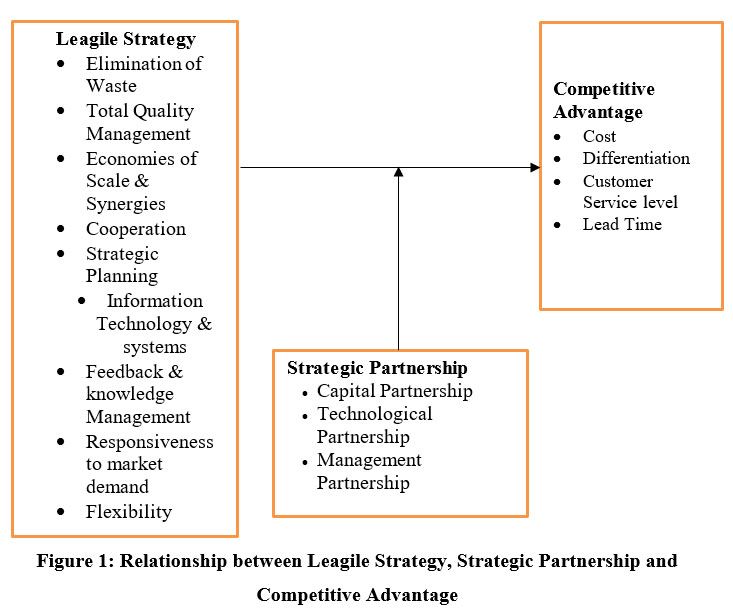 |
Figure 1: Relationship between Leagile Strategy, Strategic Partnership and Competitive Advantage. |
Materials and Methods
Supply chain strategies are classifiable into a lean strategy that emphasize cost reduction, agile, centering on quick response, and leagile, a blend of both. 22 Lean supply chains (SCs) correspond with commodity-type products targeting waste reduction, continuous improvement, and maximization of resource utilization. On the other hand, agile principles are applied when there is a need for the supply chain to respond rapidly to fluctuating demands, ensure premium quality and deal with products that have short life cycles. 23 Arasa, Mwaura, and Ngui 6 studied the relationship between SC lean, agile, and leagile strategies and achievement of competitive advantage in seed manufacturing companies in Nairobi City County, revealing they influenced competitive advantage if well executed by managers. This study focused on the influence of leagile strategy and strategic partnership on competitive advantage in the SCs of construction companies. Ambe 5 carried out an investigation aimed at establishing the application of SC best practices and strategies using survey methodology in light vehicle manufacturing firms in South Africa revealing they employed leagile strategy. The study focused on the employment of SC best practices and strategies while the current investigation concentrated on the influence of leagile strategy on competitive advantage involving strategic partnership. Madhani 24 studied the benefits of lean and agile approaches, concluding that Supply chain strategies with traditional approaches perform poorer than those having a strategy focused on either leanness, agility, or leagility. The study held that leagile strategy is better than lean or agile alone. The current study investigated the relationship between leagile strategy and competitive advantage concentrating on how that association is influenced by the strategic partnership in the supply chains of construction companies in Nairobi City County. Piotrowick et al. 25 reviewed the metrics and developed a framework for measuring leagile supply chain consisting of flexibility, responsiveness, information sharing, cooperation, time, quality, and customer satisfaction. The present study focused on determining the moderating influence of strategic partnership on leagile strategy-competitive advantage relationship. Ramana et al. 26 suggested that the dimensions of measuring leagile supply chain are customer service, flexibility, operation, and organizational performance. Agarwal et al. 27 included in the measurement of leagile supply chain strategy factors such as market sensitivity, process integration, information driver, and flexibility. Based on these previous studies, the current research measured leagile strategy in terms of elimination of waste, total quality management, economies of scale, cooperation, information technology and systems, feedback and knowledge management, responsiveness to market demand, and flexibility.
Strategic partnerships are mutually beneficial arrangements where two or more companies share the obligation to reach a joint goal by combining resources and engaging in activities coordination. 28 The strategic partnerships help in filling the gap in capacity, obtain needed resources to be the same or ahead of competitors, acquire means of distribution, overcome regulations barriers, pool resources together, reduce risk, achieve competitive advantages and generate innovations in areas that were not possible if operating alone. 29 Barata 30 studied the effect of collaborative supply chains on operational performance. The findings indicated that collaborative supply chains consisting of information quality, sharing information, alignment of incentives, and joint decision-making significantly influence operational performance. The current study concentrated on the influence of leagile strategy on competitive advantage utilizing strategic partnership as the moderating variable. Mardatillah et al.31 analyzed the characteristics of partnerships to achieve a sustainable competitive advantage based on management alliance capabilities. The study found that the characteristics of behavioral communication and technique of solution conflict were mutually effective towards gaining success with the help of management alliance capabilities. The current investigation assessed the moderating influence of strategic partnership on the relationship between leagile strategy and competitive advantage. Hisnindarsyah 32 did a case study on the effect of partnership strategy on competitive advantage mediated by market area and moderated by health service innovation in hospitals in Indonesia. The results revealed that partnership strategy and health service innovation had a direct effect on competitive advantage. Whereas market area had no significant effect on competitive advantage. The study, however, was a case study that was conducted in hospitals, focusing on health service innovation as the moderating variable. The current study employed a quantitative survey methodology concentrating on the construction industry and employed strategic partnership as the moderating variable of the study.
The basic task of strategic management is to build and maintain the competitive advantages of an enterprise, which should make it possible to achieve above-average results in its business activities. 33 The traditional tools, such as Porter’s Five Forces or the market share growth are less and less able to meet the demands of most managers because of the complexity and uncertainty of the modern business environment.34 Porter 35 upholds that a company needs to choose the type and scope of competitive advantage which can be cost leadership, differentiation, and focus in either a broad or narrow market segment. The aforementioned are positional advantages because they represent the strategic positioning of the company in the industry as a leader in cost or superior services. Udriyah et al. 36 argue competitive advantage is the collection of various items that provide an exceptional and superior position for companies to differentiate themselves from their competitors in the marketplace. Madueno 37 posits companies can actively influence competitive advantage by enhancing their relationships with partners while Saeidi et al. 38 contend it’s through elevating their customer satisfaction. A company’s competitive advantage and business performance can be strengthened through market orientation 39. Krakowski et al. 40 studied the relationship between artificial intelligence and the changing sources of competitive advantage by applying a resource-based view. The findings identified that the adoption of artificial intelligence acts as the driver, triggering interrelated substitution and complementation dynamics which jointly explains the shift in competitive advantage sources. The current study assessed the influence of leagile strategy and strategic partnership on competitive advantage.Thatte 41 suggests that firm-level factors considered when measuring competitive advantage are price, quality, delivery dependability, product innovation, and time to market. Competitive advantage can be operationalized using price/cost, quality, delivery dependability, and exploit market opportunities. 42, 43 The competitive advantage measures can be categorized as cost-based, product-based, and service-based. 44 The measurement parameters of competitive advantage are supply chain management, product differentiation, innovation, responsiveness, and cost leadership.45, 46 Time to market is generally accepted as a basis of competitive advantage. 47 Various scholars have defined and exploited competitive capabilities in terms of premium pricing, value-to-customer quality, dependable delivery, and product innovation. 48-50 Borrowing from these early studies, the present investigation utilized competitive advantage dimensions of cost, differentiation, customer service level, and lead time.
Data collection: Data Collection was done from construction companies in Nairobi City County which were categorized into three strata. The first stratum consisted of contractors registered by National Construction Authority in categories 1-8 in 2018. Questionnaires for the survey were addressed to target respondents who were Supply Chain/Procurement managers and directors or their representatives or those performing those roles in those companies. Data was collected vide the use of self-administered questionnaires. These were delivered through drop-off and emailing survey methods to provide a higher response rate, enable greater control over sample design, permit thorough respondent identification and eliminate outliers in the predefined sample frame. The questionnaires were collected through pick-up methods by the researchers. This study’s questionnaire contained closed-ended questions. To measure responses to the various questions in the questionnaire, this study formulated the inquiries on a five-point Likert-type scale. The respondents were contacted before the study date within the seven months’ period in which data collection was done from January to July 2021. A stamped return envelope containing the required response date was also provided to the respondents. Once the first set of responses was picked up or received via email, several follow-ups were done via telephones, emails, and physical revisits. New questionnaires were re-issued where there was a problem of misplacement by respondents in the targeted organizations to help increase the response rate. A second, third and fourth level of random sampling for each stratum was done to reduce the element of non-response. A total of 462 firms in the category of contractors in Nairobi City County were contacted and a total of 243 responses to completed questionnaires were collected realizing a response rate of 79.6 percent in this stratum. The same data collection method, procedure, and research instrument were employed in collecting information from those companies in the second and third stratum. The second stratum consisted of construction companies which are Kenya Association of Manufacturers members of 2018. Kenya Property Developers Association members of 2019 formed the third stratum of the population of this study.
Results and Discussion
Results
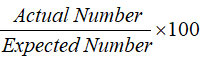
Data for this study were analyzed using Statistical Package for the Social Sciences (SPSS) version 22. SPSS is a computer program for statistical analysis which is aimed at generating both descriptive and inferential statistics. Descriptive statistics such as the mean, standard deviation, frequencies, and percentages were computed to summarize the essential features, patterns of behavior, and characteristics of these study variables. In this study, the rate of response was computed using the formula:
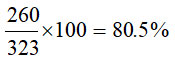
The population of the study consisted of 4, 015 firms in the SCs of construction companies in Nairobi City County. The targeted sample size was 323. Out of a sample size of 323, a total of 260 responses were collected from completed questionnaires representing an overall response rate of 80.50 percent calculated as follows:
Among the 260 responses received from the sampled construction companies, 243 were NCA1-8 contractors of 2018, 9 KAM members of 2018, and 8 KPDA members of 2019. The distribution of response rates by the sampled companies in the three strata is shown in Table 1.
Table 1: Response Rate
|
Stratum |
Sample |
Response |
Response Rate (%) |
|
Construction companies (NCA1-8 Contractors 2018) |
305 |
243 |
79.6 |
|
Construction companies (KAM members of 2018) |
9 |
9 |
100 |
|
Construction companies (KPDA members of 2019) |
9 |
8 |
88.8 |
|
Totals |
323 |
260 |
80.5 |
The descriptive analysis covered demographic characteristics of respondents such as level of education, years of service, and current position held in the individual construction companies.
Figure 2 shows observed information on the level of education of the respondents of the study.
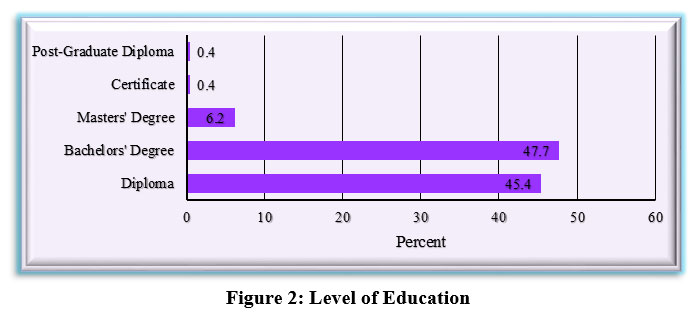 |
Figure 2: Level of Education Click here to view figure |
Figure 3 shows the information on the years of service of the respondents during the survey study.
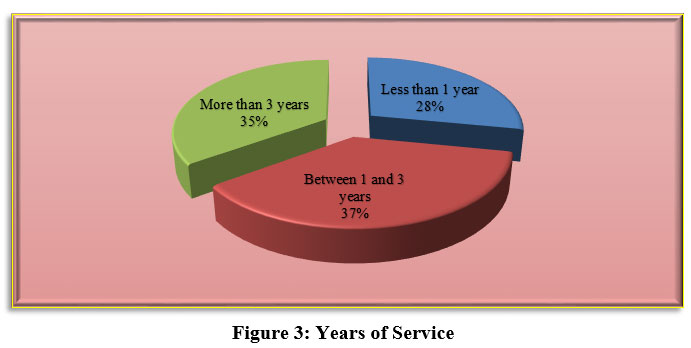 |
Figure 3: Years of Service Click here to view figure |
Table 2 shows the current position held by the respondents during the investigation.
Table 2: Position of Respondents.
|
Position |
n |
Percentage |
|
Director |
36 |
13.8 |
|
Manager |
70 |
26.9 |
|
Project Manager |
121 |
46.5 |
|
Sales Administrator/Executive |
14 |
5.4 |
|
Accountant |
5 |
1.9 |
|
Administrator |
1 |
.4 |
|
Human Resource |
3 |
1.2 |
|
CEO/MD |
3 |
1.2 |
|
Site Supervisor |
3 |
1.2 |
|
Engineer |
2 |
.8 |
|
Licensed Electrician |
1 |
.4 |
|
Finance Officer |
1 |
.4 |
|
Total |
260 |
100 |
Figure 4 shows the company ownership type during the survey study.
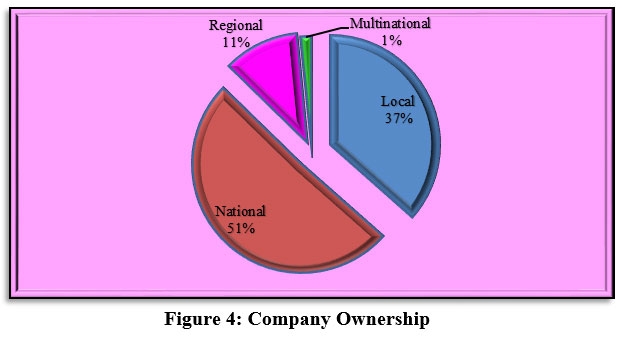 |
Figure 4: Company Ownership Click here to view figure |
Figure 5 shows the duration of operation of the targeted construction companies in the survey study.
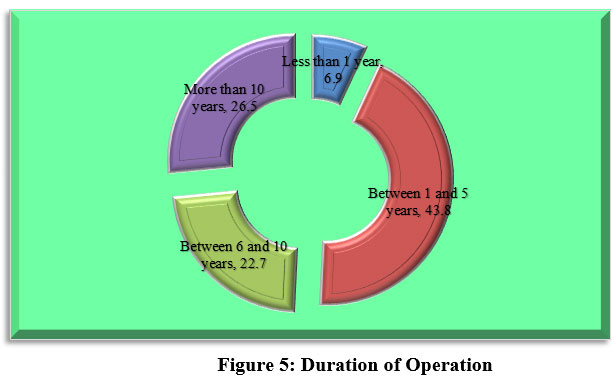 |
Figure 5: Duration of Operation. Click here to view figure |
Table 3 displays information on the distribution of companies by area of specialization.
Table 3: Area of Specialization.
|
Specialization |
n |
Percentage |
|
Building Works |
91 |
35 |
|
Road Works |
40 |
15.4 |
|
Mechanical Engineering Service |
17 |
6.5 |
|
Water Works |
31 |
11.9 |
|
Electrical Engineering Service |
14 |
5.4 |
|
All of these |
17 |
6.5 |
|
Building and Road Works |
29 |
11.2 |
|
Painting Works |
1 |
.4 |
|
Manufacturing |
9 |
3.5 |
|
Supply of Industrial & Construction Goods |
2 |
.8 |
|
Building and Water Works |
1 |
.4 |
|
Property Management |
8 |
3.0 |
|
Total |
260 |
100 |
Responses on Leagile Strategy
Eleven descriptive statements on leagile strategy in these companies were asked on a 5-point Likert-type scale ranging from 1= very small extent to 5= very large extent. The respondents were requested to state the extent to which they agreed that Leagile Strategy leads to competitive advantage in their companies using the 5-point Likert-type scale. The aim was to establish from the respondents whether leagile strategy leads to competitive advantage in the targeted construction companies and the revelations are shown in Table 4.
Table 4: Responses on Leagile Strategy.
|
Variables |
Mean |
SD |
CV% |
Sk |
|
The company keeps a minimum inventory level to eliminate waste |
3.71 |
.851 |
22.9 |
-.28 |
|
The company focuses on the highest priority goals to eliminate waste |
3.99 |
.740 |
18.5 |
-.16 |
|
The company delivers products and services that conform to customers' quality requirements |
4.18 |
.781 |
18.7 |
-.57 |
|
Company practices continuous quality improvement |
4.19 |
.762 |
18.2 |
-.45 |
|
The company practices economies of scale to achieve volume discounts |
4.18 |
.816 |
19.5 |
-.77 |
|
Company maintains a large volume of managerial expertise |
4.14 |
.863 |
20.8 |
-.56 |
|
The company maintains cooperation with suppliers and all service providers |
4.19 |
.767 |
18.3 |
-.34 |
|
Company strategically plans its activities in advance |
4.22 |
.752 |
17.8 |
-.55 |
|
Company operates using IT and market intelligence |
4.17 |
.811 |
19.4 |
-.49 |
|
The company quickly responds to changes in customer's requirements |
4.09 |
.793 |
19.4 |
-.30 |
|
The company maintains a flexible workforce, processes, and technologies |
4.30 |
.801 |
18.6 |
-.77 |
|
Average |
4.12 |
0.79 |
19.3 |
-.48 |
Response on Strategic Partnership
Eight descriptive statements on Strategic partnership by these companies were asked on a 5-point Likert-type scale ranging from 1= very small extent to 5= very large extent. Those responding were requested to state the level of agreement to the statements that reflected strategic partnership position in their companies using a 5-point Likert-type scale. The aim was to establish the extent to which strategic partnership was practiced in the supply chains of construction companies in Nairobi City County. The outcome of the responses is shown in Table 5.
Table 5: Responses to Strategic Partnership
|
Variables |
Mean |
SD |
CV% |
Sk |
|
The company maintains long-term mutually beneficial agreements with raw material suppliers |
4.10 |
.853 |
20.8 |
-.411 |
|
The company maintains long-term mutually beneficial agreements with financial service providers |
4.27 |
.706 |
16.5 |
-.568 |
|
The company maintains long-term mutually beneficial agreements with capital service providers |
4.35 |
.826 |
19.0 |
-1.09 |
|
The company maintains long-term mutually beneficial agreements with professional service providers |
4.22 |
.808 |
19.1 |
-.78 |
|
The company maintains long-term mutually beneficial agreements with IT, service providers |
4.28 |
.836 |
19.5 |
-1.18 |
|
The company effectively communicates within and networks with other companies in the industry |
4.28 |
.816 |
19.1 |
-.773 |
|
The company easily integrates with other companies in the network/industry |
4.30 |
.746 |
17.3 |
-.542 |
|
The company maintains long-term mutual beneficial agreements with management and advisory consultants |
4.16 |
.973 |
23.4 |
-.937 |
|
Average |
4.25 |
0.82 |
19.35 |
-0.79 |
Responses on Competitive Advantage
Nine descriptive statements on Competitive Advantage by these companies were asked on a 5-point Likert-type scale ranging from 1= very small extent to 5= very large extent. Those responding were requested to state the extent to which they agreed the statements reflected the Competitive Advantage position in their companies using the 5-point Likert-type scale. The aim was to establish the extent to which competitive advantage was achieved in the supply chains of construction companies in Nairobi City County, Kenya. The responses are reflected in Table 6.
Table 6: Responses on Competitive Advantage
|
Variables |
Mean |
SD |
CV% |
Sk |
|
The company offers comparatively lower prices than competitors |
3.86 |
.891 |
23.1 |
-.31 |
|
The company has been reducing its overall costs more than its competitors |
3.88 |
.850 |
21.9 |
-.42 |
|
The company focuses on offering benefits to customers more than its competitors |
4.17 |
.738 |
17.7 |
-.35 |
|
The company offers high product variety than its competitors |
4.04 |
.760 |
18.8 |
-.33 |
|
The company offers products and services with unique features than competitors |
4.06 |
.776 |
19.1 |
-.30 |
|
The company offers products and services with superior qualities than competitors |
4.18 |
.782 |
18.7 |
-.38 |
|
The company offers an especially high service level to its customers |
4.13 |
.809 |
19.6 |
-.42 |
|
Company ensures speedy delivery to customers |
4.25 |
.731 |
17.2 |
-.48 |
|
Company maintains short lead times |
4.37 |
.720 |
16.5 |
-.74 |
|
Average |
4.10 |
0.89 |
19.2 |
-0.31 |
Regression Analysis and Hypothesis Testing
Inferential statistics covering correlation and regression models were used to test the hypotheses with a view of inferring the sample into the larger population. This study’s objective was to assess the moderating influence of strategic partnership on leagile strategy-competitive advantage relationship in the supply chains of construction companies in Nairobi City County, Kenya. The tested hypothesis was expressed as follows: H01: Strategic Partnership has no significant moderating influence on the relationship between Leagile Strategy and Competitive Advantage in the Supply Chains of Construction Companies in Nairobi City County. To determine the objective and test the matching hypothesis, a regression analysis was utilized. The moderating effect of strategic partnership on leagile strategy-competitive advantage relationship was analyzed using two regression models. The first regression model was obtained when the interaction effect is included, while in the other model, the interaction effect was omitted. Therefore, testing for the moderation effect of strategic partnership was guided by the following two linear regression models (of without interaction and with interaction):

Where;
Y = Competitive Advantage (Dependent variable)
X = Leagile Strategy (Independent variable)
M1 = Strategic Partnership (Moderating variable)
X*M1 = Interaction between Leagile Strategy and Strategic Partnership
ε = the error term
β0 = Constant (intercept of the model)
β1 = Regression coefficient for Leagile Strategy
β2 = Regression coefficient for Strategic Partnership
β3 = Regression coefficient for the interaction term
The analysis for the regression model of the moderating variable (strategic partnership) without interaction as given in equation (i) above was performed and the results are summarized as shown in Table 7.
Table 7: Results of the Moderation Effect of Strategic Partnership on the Relationship between Leagile Strategy and Competitive Advantage (without Interaction).|
Model Summary |
|||||||||||||
|
R |
R2 |
Adjusted R2 |
Std. Error |
F Change |
p-value/Sig. |
||||||||
|
.358 |
.128 |
.121 |
.937 |
18.859 |
.000 |
||||||||
|
|
|
ANOVA |
|
|
|||||||||
|
|
Sum of Squares |
df |
Mean Squares |
F-statistic |
Sig. |
||||||||
|
Regression |
33.150 |
2 |
16.575 |
18.859 |
.000 |
||||||||
|
Residual |
225.869 |
257 |
.879 |
|
|
||||||||
|
Total |
259.019 |
259 |
|
|
|
||||||||
|
Dependent Variable: Competitive Advantage Predictors: (Constant), Leagile Strategy, Strategic Partnership |
|||||||||||||
|
Regression Coefficients |
|||||||||||||
|
|
Beta |
Std. Error |
t-statistics |
Sig. |
|||||||||
|
(Constant) |
.0005 |
.058 |
.008 |
.994 |
|||||||||
|
Leagile Strategy |
.153 |
.064 |
2.396 |
.014 |
|||||||||
|
Strategic Partnership |
.267 |
.064 |
4.193 |
.000 |
|||||||||
|
Dependent Variable: Competitive Advantage Predictors: (Constant), Leagile Strategy, Strategic Partnership |
|||||||||||||
Table 7, shows a multiple regression of competitive advantage on leagile strategy and strategic partnership. From the model summary in Table 7, the two variables explain 12.8% of the total variations in the competitive advantage of the construction companies enlisted where R2 = 0.128 ). The explained variation was found to be significant since the p-value was found to be less than 0.05 (p-value = 0.000 < 0.05). The obtained multiple regression model was found to correctly fit the data. This significance was seen from the results in the ANOVA section which measured model fittingness. The corresponding model significance value was 0.000. Furthermore, from the results in the regression coefficients section, both leagile strategy and strategic partnership had positive and significant regression coefficients since their respective coefficients were 0.153 and 0.267 while the corresponding p–values were 0.014 and 0.000. This observation inferred that the competitive advantage of a firm is significantly influenced by leagile strategy and strategic partnership. Thus, the multiple regression model was expressed as follows:

However, equation (iii) does not explain the effect of the interaction between leagile strategy and strategic partnership. The effect of the relationship between leagile strategy and strategic partnership was examined by including an interaction term in the multiple regression analysis. The results of this step were summarized as shown in Table 8.
Table 8: Results of the Moderation Effect of Strategic Partnership on the Relationship between Leagile Strategy and Competitive Advantage (with Interaction).
|
Model Summary |
|||||||||||||
|
R |
R2 |
Adjusted R2 |
Std. Error |
F Change |
Sig. |
||||||||
|
.363 |
.132 |
.121 |
.937 |
12.921 |
.000 |
||||||||
|
|
|
ANOVA |
|
|
|||||||||
|
|
Sum of Squares |
df |
Mean Squares |
F-statistic |
Sig. |
||||||||
|
Regression |
34.062 |
3 |
11.354 |
12.921 |
.000 |
||||||||
|
Residual |
224.957 |
256 |
.879 |
|
|
||||||||
|
Total |
259.019 |
259 |
|
|
|
||||||||
|
Regression Coefficients |
|||||||||||||
|
|
Beta |
Std. Error |
t-statistics |
Sig. |
|||||||||
|
(Constant) |
.0005 |
.059 |
.008 |
.994 |
|||||||||
|
Leagile Strategy |
.161 |
.064 |
2.505 |
.013 |
|||||||||
|
Strategic Partnership |
.264 |
.064 |
4.141 |
.000 |
|||||||||
|
Interaction |
-.060 |
.059 |
-1.019 |
.309 |
|||||||||
|
Dependent Variable: Competitive Advantage Predictors: (Constant), Leagile Strategy, Strategic Partnership |
|||||||||||||
In Table 8, the results of the findings of the described moderating effect of strategic partnership when the interaction term is included were shown. This was a multiple regression model with predictor variables being leagile strategy, strategic partnership, and the interaction term. From this model in Table 8, the explained variation was observed to be 13.2% where R2 = 0.132 . This explained variation was significant since the corresponding p-value was 0.000, which was less than 0.05. From the ANOVA results, the model was found to correctly fit the collected data since the F-statistic was significant at a 5% level of significance with a p-value = 0.000. Results from the regression coefficients showed that both leagile strategy and strategic partnership had positive effects, while interaction term had a negative effect as shown by the corresponding β’s. Further, leagile strategy and strategic partnership were observed to have significant effects since the corresponding p – values were less than 0.05 (0.013 and 0.000 respectively). A model that best describes the relationship between competitive advantage and the predictor variables, including the interaction term, was thus expressed as follows:

To test for the moderating effect of strategic partnership, the significance of the change was examined by comparing the p – values of the moderating variable before and after moderation. This was done by checking the change in the p – values for the independent variable and that of the moderating variable. That is, if a p-value is significant at a 5% level and it decreases after moderation, the variable has a significant moderating effect since a small p-value implies a high level of significance. Also, for a variable to have a significant moderating effect, the interaction variable must be significant. Moreover, a significant moderating effect is indicated by an increase in the value of a significant R2 , which measures the explained variation. It can, however, be seen from Tables 1 and 2 that in the two models, regression coefficients for leagile strategy and strategic partnership remain almost the same. Also, in both models, the respective p-values for the predictor variables are not only almost equal but also infer significance. Moreover, the explained variation is almost equal and is significant in both models. These observations do not satisfy the conditions for a significant moderation effect. This is an indication that strategic partnership acts as a predictor variable but not a moderating variable. Therefore, based on these results, the null hypothesis H01 was not rejected. This means that Strategic Partnership has no significant moderating influence on the relationship between Leagile Strategy and Competitive Advantage in the Supply Chains of Construction Companies in Nairobi City County. The results also revealed that leagile strategy and strategic partnership independently affect competitive advantage in the construction supply chains in Nairobi City County.
Discussion
The main objective of this study was to assess the moderating influence of Strategic Partnership on the relationship between Leagile Strategy and Competitive Advantage in the Supply Chains of Construction Companies in Nairobi City County, Kenya. The findings from this study were two-fold offering different outcomes before and after mediation. In the first instance, the outcome of the direct influence of leagile strategy and strategic partnership on competitive advantage without the use of interaction term was determined. If utilized as independent variables, both leagile strategy and strategic partnership had a positive significant influence on competitive advantage since the resultant p–values were less than 0.05 (0.014 & 0.000) respectively. This revelation inferred that competitive advantage is significantly influenced by leagile strategy and strategic partnership as independent variables. The finding implies that leagile strategy leads to competitive advantage in the supply chains of construction companies in Nairobi City County. The current study’s outcome exposed there was the applicability of leagile strategy in the supply chains of construction companies in Nairobi City County, which is in congruence with the outcome of Rehimnia and Moghadisian. 51 These findings are in support of suggestions by early scholars such as Miah et al. 52 who argued that when the aspects of lead-time, quality, cost, service level, responsiveness, and efficiency are considered essential, leagile strategy is necessary for tackling competition in a volatile market, especially the apparel manufacturing industry. The results of this study are in congruence with those of Arasa, Mwaura, and Ngui 6 who studied the relationship between lean, agile, and leagile strategy and competitive advantage establishing a positive correlation. The second part of the findings unearthed that strategic partnership did not have a moderating influence on the relationship between leagile strategy and competitive advantage in the supply chains of construction companies in Nairobi City County, Kenya. These findings, contradict observations by scholars such as Khouroh, Abdalla, and Handayani 53 who examined the role of strategic alliance as a moderating variable in the relationship between environmental dynamism and sustainable competitive advantage revealing strategic alliance has a moderating influence. This finding confirms that strategic partnership directly influences competitive advantage in the supply chains of construction companies supporting suggestions put forward by. 12 The scholars argued strategic partnerships play a vital role in ensuring a firm’s survival and providing access to critical resources which permit the achievement of competitive advantages under environmental turbulence. The inferences support the study by Watiri and Kihara 54 who examined the effect of strategic supplier partnerships and competitive advantage utilizing customer relationships as moderating a variable revealing both variables significantly influence competitive advantage.
Conclusion
The study established how strategic partnership does not have moderating influence on the relationship between leagile strategy and competitive advantage of construction supply chains. It was additionally discovered from this study leagile strategy and strategic partnership independently affect competitive advantage in the construction supply chains in Nairobi City County. The finding implies that other factors moderate the relationship between Leagile Strategy and Competitive Advantage. It was concluded from the findings that it is essential for businesses to adopt leagile strategy and strategic partnership because they lead to the achievement of competitive advantage, in firms in the supply chains of construction companies in Nairobi City County. The leagile strategy attributes of a flexible workforce, processes, and technologies are highly exhibited in construction companies and they play a key role in the attainment of competitive advantage. The construction companies highly practice the delivery of products and services that conforms to customers' quality requirements leading to customer satisfaction. Customer satisfaction is key in facilitating the sustenance of competitive advantage in construction companies. The practice of economies of scale and maintenance of large volumes of managerial expertise, cooperation with service providers, strategic planning, utilization of IT and market intelligence systems as well as the elimination of waste was attributed to leading to the achievement of competitive advantage in the supply chains of construction companies in Nairobi City County. A strategic partnership strategy is based on cooperation in which firms pool some of their resources to create competitive advantages. Maintaining mutually beneficial relationships helps create unique advertising opportunities for both companies and hence are appealing to customers. Construction companies are capital-intensive businesses. Large amounts of capital are invested in fixed assets such as tools, heavy equipment, and vehicles. Maintaining long-term mutually beneficial agreements with capital service providers, raw material suppliers, and financial service providers ensures survival and success in construction companies.
Implications for Theory
The findings of the research showed that leagile strategy and strategic partnership are significant contributing factors to dynamic capabilities which lead to the achievement of competitive advantage. In this study, leagile strategy is the amalgamation of the supportive strategies of lean and agile philosophies in an organization which leads to the realization of competitive advantages vide its capabilities of cost efficiency, speed of response, and flexibility. The strategic partnership, a strategy based on cooperation, requiring firms to pool resources also contributed to the attainment of competitive advantages. The implication is in the manifestation of the characteristics associated with leagile strategy and strategic partnership which enabled the sensing, seizing, and reconfiguration of resources contributing to the attainment of competitive advantages in the supply chains of construction companies. This supports DC Theory which proposes that it may be essential for firms to sense, seize and reconfigure their resources and capabilities to attain competitive advantage. It has been established from the study that strategic partnership has a significant direct influence on competitive advantage through continuous collaboration which enabled SC associates to gain access to trade, people, facilities, documents, and knowledge between them, hence facilitating that achievement of gains. The successful attainment of competitive advantage by construction companies in this study revolved around the quality of the relationship between clients and service providers. These findings support the Networks Theory proposed by Håakanson and Snehota101 which directs that firms who occupy a central position in the network enhance their cognizance of available resources and capabilities in the SC. Such a company further has a positive impact on coordinating between the buying firm and the suppliers.
Implications for Knowledge
The study offers an additional source of evidence and existing literature about the aspects which influence Competitive Advantage in the supply chains of Construction Companies. The findings of this study provide the most recent documented information on the influence of Leagile Strategy and Strategic Partnership on Competitive Advantage in the supply chains of construction companies.
Implications for Policy
The policymakers in the government and construction industry can benefit from the findings that leagile strategy and strategic partnership influence competitive advantage. Those institutions which influence policy in the construction industry in Nairobi City County, Kenya such as the National Construction Authority, Nairobi City County, Kenya Association of Manufacturers, Competition Authority of Kenya, Kenya Bureau of Standards, and Kenya Property Developers Association could utilize the study’s outcome to initiate organizational reforms.
Implications for Practice
The attributes of leagile strategy and strategic partnership and competitive advantage are highly visible and useful for practitioners because they are in cognizance of the way businesses achieve competitive advantage and survive in the face of complex, turbulent and competitive environments vide a blend of strategies such as leagile strategy and strategic partnership. The practitioners are aware of the aspects of leagile strategy and strategic partnership which lead to cost reduction, superior quality, and customer service as well as shorter lead time.
Limitations of the study
The leading purpose of the current investigation was to assess the influence of leagile strategy and strategic partnership on competitive advantage in the supply chains of construction companies in Nairobi City County. At the time of data collection which was in 2021, the COVID-19 pandemic was at its peak and several restrictions on the access of premises were put in place which was not conducive for data collection. In most of the companies surveyed, employees were reluctant to accept hard copies of the questionnaires while some restrictions put in place as a result of the COVID-19 pandemic barred data collectors from entering company premises.
Areas for Future Research
It is recommended that using similar conceptualization, future studies are carried out in different contexts. The current investigation employed a quantitative descriptive research technique using a cross-sectional survey strategy. The use of longitudinal strategy in a future study may show whether the findings vary over time. Structured questionnaires were utilized as the research instrument and Statistical Package for the Social Sciences (SPSS) version 22 for inferential data analysis in the study. It is suggested that future investigations should focus on using dissimilar research designs, and data analysis tools. A mixed-methods approach including both questionnaire and observation could generate different disclosures too. The study determined the influence of leagile strategy on competitive advantage by using strategic partnership as the moderating variable. Future studies should be done using a different moderating variable in the relationship between leagile strategy and competitive advantage in other supply chains.
Acknowledgment
This work was supported by the University of Nairobi and the National Commission for Science Technology and Innovation (NACOSTI). These two institutions provided the needed permission to conduct research in Nairobi City County, Kenya. I sincerely thank co-authors Professor Zachary Bolo Awino, Professor Martin Ogutu, and Professor James Njihia for the knowledge shared and imparted. I wish to thank the whole of the University of Nairobi fraternity for facilitating the processes which enabled me to collect data.
Conflict of Interest
The author(s) declares no conflict of interest.
Funding Sources
The author(s) received no financial support for research, authorship, and/or publication of this article.
References
- Kenya Association of Manufacturers members (2018)
CrossRef - Kibuchi PM. The contribution of human factors in the performance of construction projects in Kenya: a case study of construction project team participants in Nairobi (Doctoral dissertation, University of Nairobi, Kenya). 2012.
- Meyskens, MA. "How Do Partnerships Lead to a Competitive Advantage? Applying the Resource Based View to Nascent Social
Ventures". 2010. FIU Electronic Theses and Dissertations. 238. https://digitalcommons.fiu.edu/etd/238 - Franco M. ‘Determining factors in the success of strategic alliances: an empirical study performed in Portuguese firms’, European J. International Management. 2011; (5), 608–632.
- Ambe, M. Determining an optimal supply chain strategy. Journal of Transport and Supply Chain Management. 2012; 6(1)35.
- Arasa R, Mwaura R, Ngui T. The relationship between supply chain strategies and achievement of competitive advantage in seed manufacturing companies in Nairobi county, Kenya. International Journal of Science and Research. 2016; 5(1): 358-364.
- Galankashi MR, Hisjam M, Helmi SA. Agile supplier selection: a fuzzy analytic hierarchy process (FAHP) approach. In Proceedings of the sixth international conference on Industrial Engineering and Operations Management (IEOM). 2016, March.
- Denise R. Lean Production and Agile Organization: The Link between Supply Chain and Sustainable Development. 2012.
- Ismail, H. S., & Sharifi, H. A balanced approach to building agile supply chains. International Journal of Physical Distribution & Logistics Management. 2006.
- Hair JF, Ortinau DJ, Harrison DE. Essentials of Marketing Research (Vol. 2). New York, NY: McGraw-Hill/Irwin. 2010.
- Christiansen PE, Kotzab H, Mikkola JH. Coordination and sharing logistics information in leagile supply chains. International Journal of Procurement Management. 2007; 1(1-2): 79-96.
- Cobeña M, Gallego Á. Casanueva C. Heterogeneity, diversity and complementarity in alliance portfolios. European Management Journal. 2017; 35(4): 464-476.
- Arbussa A, Bikfalvi A, Marquès P. Strategic agility-driven business model renewal: The case of an SME. Management Decision. 2017.
- Uddin MB, Akhter B. Strategic alliance and competitiveness: theoretical framework. Researchers World, 2011; 2(1): 43.
- Mohr JJ, Gundlach GT, Spekman R. Legal ramifications of strategic alliances. Marketing Management. 1994; 3(2): 38
- Gupta S, Garg M, Goh M, Kumar M. Leagility in manufacturing and procurement: A conceptual framework. In Always-On Enterprise Information Systems for Business Continuance: Technologies for Reliable and Scalable Operations. 2010. (pp. 175-186). IGI Global.
- Martín?de?Castro, Gregorio, et al. "Organizational capital as competitive advantage of the firm." Journal of Intellectual Capital. 2006.
- Wang H, Chen W. Is firm-specific innovation associated with greater value appropriation? The roles of environmental dynamism and technological diversity. Research Policy. 2010; 39: 141-154
- Duclos LK, Vokurka RJ, Lummus RR. A conceptual model of supply chain flexibility, Industrial Management and Data Systems. 2003; Vol. 103 No. 6, pp. 446-456.
- Gattorna J, Jones T. Strategic supply chain alignment: best practice in supply chain management. Gower Publishing Ltd. (Eds.). 1998.
- Payne, Adrian, Martin Christopher, Moira Clark, and Helen Peck. Relationship marketing for competitive advantage: winning and keeping customers. Elsevier. 1998.
- Sharma P, Kulkarni MS. Framework for a dynamic and responsive: Time separated – lean-agile spare parts replenishment system in army. International Journal of Productivity and Performance Management. 2016; 65(2): 07-222.
- Madhani PM. Supply chain strategy selection: A multi-criteria decision-making approach. The IUP Journal of Supply Chain Management. 2017; 14(2), 38–56
- Madhani PM. Building Customer-Focused Supply Chain Strategy With 4R Model. Journal of Contemporary Management Research. 2019; 12 (1), 14–32.
- Piotrowicz WD, Ryciuk U, Szymczak M. Lean and agile metrics. Literature review and framework for measuring leagile supply chain. International Journal of Productivity and Performance Management. 2021; Vol. ahead-of-print No. ahead-of-print.
- Ramana D, Rao K, Kumar J. Evaluation of performance metrics of leagile supply chain through fuzzy MCDM. Decision science letters. 2013;2(3):211-22
- Agarwal A, Shankar R, Tiwari MK. Modeling agility of supply chain. Industrial Marketing Management. 2007; 36(4): 443-457.
- Zirulia L, Nicholas V. Strategic technology alliances and networks, Economics of Innovation and New Technology. 2015; 24(5): 490-509.
- Wangui, Karanja Ann, Odero Auma Faith, and E. Aketch Ng’ong’a. "Strategies to Improve Performance Adopted by Social Enterprises in Kenya." International Journal of Academic Research In Business and Social Sciences. 2009; .9(5).
- Barata C. The influence of collaborative supply chains on the company's operational performance in Yogyakarta. Yogyakarta: UIN Press. 2016.
- Mardatillah, Rosmayani RA. Market Development Business Strategy of Eco-Friendly Craft From Palm Oil Stand Waste in Rokan Hilir, Riau. Jurnal Aplikasi Bisnis Dan Manajemen (JABM). 2022; 8(2): 434.
- Hisnindarsyah H. The effect of partnership strategy on competitive advantages through health services’ Innovation at Dr. FX Suhardjo Navy Hospital Lantamal IX Ambon." International Conference of Business and Social Sciences. 2020.
- Cegli?ski P. The use of strategic marketing management tools in contemporary enterprises. Marketing in Zarz?dzanie. 2016; 5(46): 9 – 16.
- Schwenker B, Wulf T. Conclusion–Good management and scenario planning. In Scenario-based Strategic Planning. Springer Gabler, Wiesbaden. 2013; (pp. 215-220).
- Porter ME, Van der Linde C. Toward a new conception of the environment- competitiveness relationship. Journal of economic perspectives. 1995; 9(4): 97-118.
- Udriyah U, Jacquline T, Azam S. The effects of market orientation and innovation on competitive advantage and business performance of textile SMEs. Management Science Letters. 2019; 9(9):1419-1428.
- Madueno JH, Jorge. L, Conesa IM, Martínez-Martínez D. Relationship between corporate social responsibility and competitive performance in Spanish SMEs: Empirical evidence from a stakeholders’ perspective. BRQ Business Research Quarterly. 2016; 19(1): 55-72.
- Saeidi, Sayedeh P. et al. "How does corporate social responsibility contribute to firm financial performance? The mediating role of competitive advantage, reputation, and customer satisfaction." Journal of Business Research. 2015; 68.2 341-350.
- Talaja A. et al. Market orientation, competitive advantage and business performance: Exploring the indirect effects." Društvena istraživanja: ?asopis za op?a društvena pitanja. 2017; 583-604.
- Krakowski S., Johannes L, Sebastian R. Artificial intelligence and the changing sources of competitive advantage." Strategic Management Journal. 2022.
- Thatte AA. Competitive advantage of a firm through supply chain responsiveness and SCM practices (Doctoral dissertation, University of Toledo). 2007.
- Newbert SL. Value, rareness, competitive advantage, and performance: a conceptual?level empirical investigation of the resource?based view of the firm. Strategic management journal. 2008; Jul;29(7):745-68.
- Sigalas C, Economou VP. Revisiting the concept of competitive advantage: Problems and fallacies arising from its conceptualization. Journal of Strategy and Management. 2013 Feb 15; 6(1):61-80.
- Ismail AI, Rose RC, Abdullah H, Uli J. The relationship between organisational competitive advantage and performance moderated by the age and size of firms. Asian Academy of Management Journal. 2010 Jul 1;15(2):157-73.
- Vinayan G. Impact of Total Quality Management (TQM) and Sun Tzu Art of War strategies on Sustainable Competitive Advantage (SCA): A study of Malaysian manufacturing industries (Doctoral dissertation, Multimedia University, Malaysia. 2012.
- Sidik IG. Conceptual framework of factors affecting SME development: Mediating factors on the relationship of entrepreneur traits and SME performance. Procedia Economics and Finance. 2012, Jan 1;4:373-83.
- Holweg M. An investigation into supplier responsiveness: Empirical evidence from the automotive Industry. The International Journal of Logistics Management. 2005, Jun 1.
- Koufteros XA, Vonderembse MA, Doll WJ. Integrated product development practices and competitive capabilities: the effects of uncertainty, equivocality, and platform strategy. Journal of Operations Management. 2002; 20(4), 331-355.
- Dröge C, Vickery S, Markland RE. Sources and outcomes of competitive advantage: an exploratory study in the furniture industry. Decision Sciences. 1994 Sep; 25(5?6):669-89.
- Li S, Ragu-Nathan B, Ragu-Nathan TS, Subba RS. “The Impact of Supply Chain Management Practise on Competitive Advantage and Organizational Performance,” Omega. 2006; 34(1): 107 – 124.
- Rahimnia F, Moghadasian A. Supply chain leagility in professional services: how to apply decoupling point concept in healthcare delivery system. Supply Chain Management: An International Journal. 2010.
- Miah MMU, Ali SMI, Hossain MI. Assessment of risk factors that affecting agriculture productions and identifying adaptation options for increased productions and improved livelihoods of the farming community in the vulnerable area of droughts in Bangladesh. Octa Journal of Environmental Research. 2013; 1(4).
- Khouroh U, Abdullah F, Handayani K. The Role of Strategic Alliance In Mediating The Relationship Between Environmental Dynamism And Sustainable Competitive Advantage. 2019.
- Watiri L, Kihara A. Influence of Supply Chain Management Practices on Competitive Advantage in Cement Manufacturing Industry: A Case of East African Portland Cement Company Limited. Strategic Journal of Business & Change Management. 2017; 2(27), 461-481.

This work is licensed under a Creative Commons Attribution 4.0 International License.