
The Influence of the Business Risk-Based Auditing Application on the Audit Process: An Empirical Investigation in the Yemeni Context.
Zaid Mohammed Esmail*  and S.M Imamul Haque
1Department of Commerce, Aligarh Muslim University, Aligarh, Uttar Pradesh India .
http://dx.doi.org/10.12944/JBSFM.04.02.04
Copy the following to cite this article:
Esmail Z. M, Haque S. M. I. "The Influence of the Business Risk-Based Auditing Application on the Audit Process: An Empirical Investigation in the Yemeni Context". Journal of Business Strategy Finance and Management, 4(2). DOI:http://dx.doi.org/10.12944/JBSFM.04.02.04
Copy the following to cite this URL:
Esmail Z. M, Haque S. M. I. "The Influence of the Business Risk-Based Auditing Application on the Audit Process: An Empirical Investigation in the Yemeni Context". Journal of Business Strategy Finance and Management, 4(2). Available from:https://bit.ly/3VEsEq8
Download article (pdf) Citation Manager Publish History



Introduction
In order to assess the risks of material misstatement, plan audits, and define the nature, timing, and scope of the audit process, an auditor, must be familiar with the client's environment and business risks, per International Auditing Standard (ISA) No. 3151. The ISA 315 generated a qualitative move in the field of the audit profession; nonetheless, it does not provide detailed instructions on how to incorporate business risk assessment into the audit process. International auditing firms have developed a modern audit method they call the "business risk audit methodology," or BRA, in response to the International Auditing Standards (IASs) requirements and to keep up with the rapidly evolving business environment2,3. Business risks, as defined by this approach, are those that could have a negative effect on an organization's ability to carry out its goals and strategies as a result of significant conditions, events, actions, or inactions4. The BRA approach is based on the philosophy that the audit client's repeated failure to accomplish its goals could spell its collapse. Consequently, introduced essentially as a significant innovation in audit, BRA is a technique based on an analytical approach to planning the audit process, risk assessment, conducting substantive tests, and related evidence gathering5,6. Business risk-based auditing proponents contend that a business's underlying threats will eventually substantially influence the financial statements. Therefore, the audit process will be more effective when the auditor deals with the entire client’s circumstances, not just the financial information system7,8,3. According to Paino et al15, the effects of many business risks, such as the risk of a declining client base and its influences on inventories and receivables, could be immediately reflected in the financial statements. Curtis and Turley 9 argue that the BRA method allows for a more thorough evaluation of the client's business risk because it extends beyond the traditional scope of an accounting information system.
To improve audit efficiency and generate consistent auditing quality on a global scale, several international audit firms have embraced business risk-based auditing and advocated for its implementation in various contexts10. The risk related to the client's financial statements is no longer the primary focus of audits performed under BRA; instead, the focus has shifted to the risks associated with the client's business and environment. As a result, audits must move away from exhaustive testing of minute details in favor of more in-depth examinations of an entity's capacity to identify, assess, and respond to risk11. The auditors implementing the BRA method should familiarize themselves with management's plans, operations, and safeguards to prevent potential company risks. Therefore, they will likely employ this information to improve the planning and execution of the audit process. The primary purpose of this research is to investigate how the BRA method affects auditing procedures. In particular, how the application of this cutting-edge methodology influences the execution of analytical procedures, the evaluation of internal controls, and the gathering and interpretation of audit evidence. This research is the first one that the author is aware of to look into how the BRA methodology affects the detailed issues of the auditing process. This investigation is vital, especially for the BRA approach due, for many reasons, such as its significant focus on the client’s business network9, and its obvious influence on audit fees12,13,14, auditors’ independence2, changes in audit procedures15, and the possibility of introducing additional information in the audit report16.
There are two primary reasons why Yemen was selected for this investigation. The first is that audit clients in Yemen face numerous business risks. War and political unrest in Yemen have exacerbated preexisting business risks (such as weak corporate governance, ineffective control systems structures, and a lack of clarity regarding the company's objectives and strategies). In these cases, auditors must consider the far-reaching effects of business risk on their audit clients' operations and financial statements. An expanded analysis of the client's business conditions and associated risks is made possible by the BRA method. The second is that in 2020, Yemen adopted the International Standards on Auditing (ISA), which call for a comprehensive assessment of business risk and a strategic response to that risk through careful planning and thorough auditing. Therefore, this research aimed to look into the impact of implementing a new audit methodology (BRA) in the Yemeni context on the audit process. The study addresses the following questions:
Q1: Does the additional cost of the BRA application represent an obstacle to adopting it in the Yemeni audit market?
Q2: Does implementing the BRA approach influence the performance of the analytical procedures?
Q3: If the BRA method is used, how does it improve the efficiency of evaluating internal controls?
Q4: What effect does the BRA approach have on collecting and assessing audit evidence?
The research questions were answered through a questionnaire survey of a representative sample of Yemeni auditors. Some auditors in Yemen have affiliations with International audit networks, others are locally based but lack International relations, and the rest are individual auditors. This study contributes to the literature on audit practice by providing a better understanding of how modern audit methods such as "BRA" affects audit procedures. Further, it will help auditors to comply with the ISAs with practical consciousness.
The remaining parts of this paper continue as follows. The next part offers a concise summary of the research on the BRA method. The development of the hypotheses is discussed in Section 3. In the following section, we present the research method, which includes a description of the sample selection and the instrument used in the study. In Section 5, we present and discuss the data analysis findings. Discussion of results is presented in Section 6. Conclusions, limitations, and recommendations for future research are presented in the last section.
Business risk-based auditing has received significant attention in research as to different issues. Several studies have examined the association between the risk of clients’ businesses and the financial audit process, and most research found that such a link exists17,18,19,20,21. The results of these studies generally show that a high level of business risk necessitates more audit effort, which supports the BRA methodology’s fundamental argument that clients’ business risks ultimately influence more or less the financial statement. According to Matthews (2006)22, the audit process has always been planned with business risks into account long before it became a self-contained audit approach.
As a result of the incorporation of business risk concepts into audit practice, many researchers have looked into how auditing has evolved to account for the new emphasis on business risks. Connecting business risks to the audit process, as found by Shelton et al.23 and Paino et al.15, necessitates more time and effort spent on the audit process. Thus, audit strategy and practice have shifted as a result of adopting the BRA methodology.
Schultz Jr et al.24 found that more risk conditions were identified, and the risk of misstatement was assessed at a higher level when auditors used a business risk audit strategy during the audit planning phase instead of traditional audit programs. Paino et al.15 studied how an auditor's assessment of business risk impacted the auditing procedures they applied. They found a significant shift in auditing practices as a result of the business risks their clients were exposed to. This finding bolstered the conclusions drawn by Bierstaker & Wright7, who investigated the impact of BRA implementation on the documentation of internal controls and found that auditors increasingly relied on narratives when documenting and testing internal controls. That adjustment was thought to be better suited to the new method (BRA) and would increase efficiency. When adapting an audit approach in light of business risks, auditors should prioritize analytical procedures over detailed substantive testing, as Shelton et al.23 emphasized. The risks of material misstatement, going concern, and financial distress are all part of the business risk analysis's linked risk assessment process, which Samaha & Hegazy25 note is crucial to auditors' ability to carry out analytical procedures.
The BRA application by audit firms has been the subject of much literature. Eilifsen et al.26 were among the earliest researchers who undertook an empirical study on the application of the BRA methodology. Their investigation revealed that the BRA application led to enhanced risk assessment and evidence-gathering procedures, as well as modifications to the management of the audits and the organization of the audit teams. Subsequently, a slew of authors have looked into the new audit methodology (BRA) from various angles. According to Knechel8, auditors are required to use a variety of internal and external resources to comply with BRA. Sometimes, the data and evidence accumulated about business risk appear to contradict one another. Therefore, auditors need the ability to draw conclusions from information that may seem ambiguous or the ability to develop this ability through ongoing training. In a similar context, Curtis and Turley9 surveyed partners and other high-ranking employees at the four largest accounting firms in the world. The auditors' use of BRA with the financial reporting data was discovered to be problematic. When they interviewed these auditors, they found that auditors had different perspectives on how much attention should be paid to business risks and financial statement information during the auditing process. It was also mentioned that some auditors had reservations about assessing business risks at the wrong stage of the audit process for fear of the omission of significant misstatements in financial records.
A recent study by Curtis & Turley11 found that the BRA approach allowed an auditor to conduct a more in-depth evaluation of client business risk by expanding evidence-collection procedures beyond the traditional scope of the financial information systems. Although most studies have focused on how the BRA relates to the riskiness of a client's business, it would be instructive to look at how the BRA approach modifies analytical procedures, assessments of internal controls, and the gathering and evaluation of audit evidence. These are the gaps where more research is needed, as determined by this study.
Hypotheses development
According to the BRA philosophy, any possible threat to an entity's operations is automatically considered a potential source of the risk of a material misstatement. Therefore, to determine the likelihood of management fraud and business failure, the BRA technique is recommended by international auditing firms to conduct audits. This is because it provides auditors with a comprehensive understanding of a client's business, environment, and processes. As stated by Curtis & Turley9, the BRA has prompted changes in the way audit procedures are performed, risk assessments are carried out, and evidence of these things is gathered. Accordingly, this research aims to investigate how the introduction of BRAs has affected auditing practices.
The cost of the BRA approach application
It is essential for audit firms to consider how much it will cost to implement a specific audit methodology to remain competitive. Results from previous studies estimating the cost of implementing the BRA method have been inconsistent. Concerns have been raised about the increased cost of audits under the BRA methodology by auditors in developing countries (such as Jordan, Kenya, Libya, Tunisia, and Vietnam) that have implemented it. They claim that conducting thorough business risk assessments and analyses before implementing BRA is time-consuming and costly 10,13,27. The financial burden on auditors and their clients is cited as a major drawback of using the BRA methodology by Kutum et al28. This may be true in some cases, but a new study by De Martinis & Houghton29 demonstrates that selecting audit procedures with the BRA is an efficient way to perform audits with little over-or under-auditing. This research seeks to answer the question of whether or not the cost of the BRA application prevents it from being widely used in the Yemeni audit market. The following hypothesis will be put to the test:
H1: The cost of the BRA implementation has a significant bearing on its adoption in the Yemeni setting.
Analytical procedures performance
It is widely accepted in the auditing field that analytical procedures (APs) are useful audit tools for identifying a high percentage of material errors across all audit phases. In the practical context, international auditing standards recommend that auditors use APs to identify business risks (ISA 315; ISA 330; ISA 520). According to a number of studies25,30, analytical procedures have been shown to greatly aid auditors in risk assessment, both in terms of business risks and audit risks. Research by Schultz et al.24 found that using the BRA technique aided in the early detection of risk factors during analytical procedures, thereby improving auditor judgment. The impact of BRA implementation on analytical procedures efficiency is investigated here. The following hypothesis is to be tested:
H2: When used, the BRA approach improves analytical procedures' performance efficiency.
Assessment of the internal controls
In order to effectively prepare the audit engagement and define the nature, scope, and timing of audit testing that needs to be carried out, auditors must have a "sufficient understanding of the client's internal control," per auditing standards (ISA 315 and ISA 400)1,31. The BRA approach communicates the connection between the client's business and risks and the internal controls designed to deal with those risks as an essential audit step. According to international audit firms, the modern audit methodology can improve audit effectiveness by emphasizing learning about management's strategies, analyzing business processes, assessing risks, and setting up internal controls to keep them in check. According to Bierstaker and Wright7, BRA permits auditors to draw on their in-depth knowledge of a client's business to gain a more nuanced understanding of the control system's strengths and weaknesses and, thus, reliance on internal controls. The evaluation of internal control systems is one area that will be investigated as part of this study. Hence, the following hypothesis is formulated:
H3: Implementing the BRA method profoundly affects the evaluation of a client's internal controls.
Gathering and evaluating audit evidence
For the auditors to form an opinion on the financial statements, they must first collect and assess evidence to back up their judgments. The term "audit evidence" is defined as "the information used by the auditor to arrive at the conclusions on which the audit opinion is based, including information in the accounting systems underlying the financial statements and other sources"32. Traditionally, auditors have collected evidence by examining financial records and looking for information in financial transactions or accounting systems to verify the accuracy of the financial statements. Using the BRA's standards as a guide, auditors must gather information from numerous internal and external sources. According to Curtis et al.11, the BRA has widened its evidence-gathering procedures beyond the confines of the accounting information systems in order to provide a more in-depth evaluation of the client's business conditions. The results of the BRA technique on audit evidence are examined in this study. The following hypothesis is therefore formulated:
H4: Applying the BRA method impacts the processes involved in accumulating and analyzing audit evidence.
Research Method
This research aims to investigate external auditors' perceptions of using the BRA approach in Yemen. Figure 1 presents the research model developed in this paper after conducting a literature review of the BRA method and the relevant auditing standards (ISA 315, 330, 400, 500, and 520). This model illustrates the interdependencies among the variables that make up the research hypotheses. Data was gathered from a cross-section of Yemeni external auditors via a structured questionnaire.
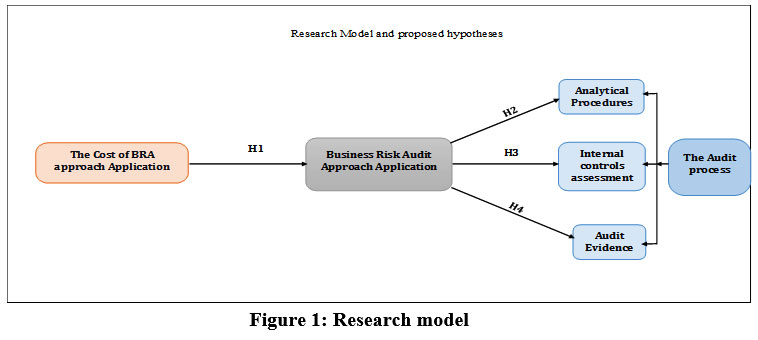 |
Figure 1: Research model. Click here to view Figure |
Sampling and data collection
The participants in this research are auditors working in the field in Yemen. About 395 practicing auditors existed in Yemen in 2022. Zikmund et al.33 indicated that to investigate all items in the instrument properly, you will need a sample size of at least ten times the number of items. Google Forms were primarily used to administer an online questionnaire and collect data. Online surveys have been used in several research projects on auditing 34,35. The sampling framework was represented by the list of practitioners-chartered accountants issued by the Supervisory Committee of Yemeni Chartered Accountants, from which the sample units (respondents) were drawn. Due to the availability of a sampling unit framework, data were collected using a probability systematic sampling strategy. Each selected auditor was personally invited via voicemail from the researcher who detailed the significance of the study and their role in it. Three hundred surveys were distributed to auditors in Yemen via email, WhatsApp, and Telegram. Respondents click the link to complete the survey on their computer, mobile phone, or tablet. The period for which the data were gathered was from February 10, 2022, to May 25, 2022. After excluding four outliers with low standard deviations, 229 responses were received, but only 225 were considered valid (75% response rate).
Questionnaire and measurement
There are 20 questions in the survey, all of which pertain to the influence of the BRA approach during the auditing procedure. The survey asks about demographics like majors and institutions and addresses five variables used to formulate the research hypotheses. The necessary items for measuring each construct (variable) were adopted from previous research and International Auditing Standards (ISA). Abdullatif and AlKhadash10 and Kutum et al.28 have provided us with estimates of the financial burden of BRA implementation. Analytical procedures were evaluated based on how much of an effect the BRA application had on the audit process using ISA 315 and ISA 520. Items used to measure the impact of BRA on internal control assessment were taken from Bierstaker and Wright7, while the audit evidence scales were developed using ISA 315 and ISA 500. Finally, items from Van Buuren36 were used to assess the BRA application variable. The questions on the instrument were translated into Arabic to be relevant to the auditing context in Yemen, and items on the instrument were modified to fit the study's context. This survey gives responses based on a five-point Likert scale ranging from 1 (strongly disagree) to 5 (strongly agree). Once the survey was built, it was conducted through some preliminary testing (n = 37) to ensure that respondents would not have any trouble interpreting the scales. The Cronbach's alpha for the pilot study was 0.896, an acceptable reliability level, as reported by a group of researchers37.
Data analysis technique
The research model depicts the investigation into the interrelationships of multiple independent and dependent variables (fig. 1). Thus, PLS-SEM was employed to examine the study's data. To estimate the relationships between many variables in a research model with multiple constructs, PLS-SEM is the most effective method, as stated by Hair et al37. PLS-SEM is the best statistical tool for the current research model because it is based on the idea that a dependent variable in one multiple regression can be transformed into an independent variable in a subsequent equation38. The data was analyzed using SmartPLS software (3.3.7 version), and two models were evaluated. In PLS terminology, the outer model assessment is the process of using the data to evaluate the measurement model that demonstrates how the measured variables represent the constructs. Next, we conduct hypotheses testing, also known as structural model evaluation, to see how the variables are connected 37.
Results
Respondents’ profile
The demographic information provided by the survey was used to grasp the respondents' professional situations better. Table 1 displays the respondent's background information, including education, work experience, and more. The research showed that only 40% (n = 90) of Yemeni auditors had earned a postgraduate degree (High Diploma/Master/Ph.D.), while 60% (n = 135) held a bachelor's degree in accounting, the minimum requirement for practicing auditing in Yemen. More than a third (41.3%) have more than fifteen years of experience in auditing practice (n = 93), and 27.6% (n = 62) have between ten and fifteen years of experience. Of all auditors, only 31.1% had less than ten years of experience. This finding suggests that over two-thirds of the auditors who participated in the study had significant auditing experience. One of the most crucial socioeconomic indicators is the auditor's role within the firm. The vast majority of the study's participants (n = 151), or 67.1%, were either owners or partners of the audit firms they worked for. The remaining participants were either audit managers or audit team members. Based on the responses, most people have some say over the audit methods employed by their companies. Participants were also surveyed about the methods they employ when conducting audits. The results show that the type of engagement for 61.8% of Yemeni auditors (n = 139) determines the audit approach taken. There is much personal estimation when it comes to auditing in Yemen if this number is this high. Twenty-four percent of Yemeni auditors used risk-based auditing, while 9.8 percent used a systems-based auditing approach, and only eight percent still used traditional methods.
Table 1: Demographic Profile details of the respondents
|
Demographics |
Particulars |
Frequency |
Percentage (%) |
|
Qualification
|
B. Com |
135 |
60.0 |
|
M. Com |
57 |
25.3 |
|
|
Ph.D. |
28 |
12.5 |
|
|
Others |
5 |
2.2 |
|
|
|
|
|
|
|
Experience |
Less Than 5 Years |
30 |
13.3 |
|
5 To Less Than 10 Years |
40 |
17.8 |
|
|
10 To Less Than 15 Years |
62 |
27.6 |
|
|
Above 15 Years |
93 |
41.3 |
|
|
|
|
|
|
|
Position |
Audit Firm's Owner |
121 |
53.8 |
|
Partner in an Audit Firm |
30 |
13.3 |
|
|
Audit Manager |
32 |
14.2 |
|
|
Audit Team Member |
42 |
18.7 |
|
|
|
|
|
|
|
Audit Approach |
Traditional Method |
18 |
8.0 |
|
System-based Audit |
22 |
9.8 |
|
|
Risk Based Audit |
46 |
20.4 |
|
|
According to the Nature of the work required |
139 |
61.8 |
PLS-SEM analysis
Measurement model (Outer model assessment)
The aim of the measurement model analysis is to evaluate the precision of the instrument used in this paper. Parameters such as internal consistency reliability, convergent validity, and discriminant validity are used to assess the quality of a measurement model, as stated by Lee et al.39 and Hair et al.40. Cronbach's alpha (CA) and the composite reliability (CR) indicator are commonly used by researchers to assess the consistency and precision of construct scales41. All constructs in the current study have adequate internal consistency, as indicated by Cronbach's alpha (CA) values above the threshold value (0.70), ranging from 0.809 for the Audit evidence to 0.867 for the internal controls. Moreover, the PLS-SEM technique relies on composite reliability (CR) as its primary internal consistency measure. The composite reliability values in the study ranged from 0.874-0.907, well above the recommended cutoff value of 0.70. A convergent validity indicator quantifies the degree of agreement between items that measure the same construct42. To examine the convergent validity, the factor loadings of each component and the average variance extracted (AVE) were computed. From 0.709 to 0.886, the factor loadings are within the acceptable range (0.708). Further, all of the constructions had AVE values higher than the proposed threshold of 0.50. 40,42. Table 2 displays the measurement model's convergent validity and internal consistency reliability.
Table 2: Reliability and validity of the constructs
|
Constructs |
Items |
Factor Loading |
Cronbach’s Alpha value (CA) |
Composite Reliability (CR) |
Average variance extracted (AVE) |
|
Cost of Application (CA) |
CA1 CA2 CA3 CA4 |
0.758 0.839 0.849 0.855 |
0.847 |
0.896 |
0.683 |
|
BRA Application (BA) |
BA1 BA2 BA3 BA4 |
0.712 0.799 0.828 0.860 |
0.864 |
0.899 |
0.694 |
|
Analytical Procedures (AP) |
AP1 AP2 AP3 AP4 |
0.857 0.856 0.886 0.709 |
0.845 |
0.896 |
0.685 |
|
Internal Controls (IC) |
IC1 IC2 IC3 IC4 |
0.823 0.857 0.876 0.809 |
0.867 |
0.907 |
0.709 |
|
Audit Evidence (AE) |
AE1 AE2 AE3 AE4 |
0.784 0.803 0.795 0.805 |
0.809 |
0.874 |
0.635 |
The measurement model's discriminative validity must also be evaluated. The discriminant validity of a scale is evaluated using the criterion method developed by Fornell and Larcker (1981). To meet this criterion, the relationship between a construct and its indicators must be significantly stronger than the relationships between other constructs 40,43. Table 4-3 shows the correlation matrix and the Fornell-Larcker discriminant validity criteria. Each construct's square root of AVE was greater than its correlations with the others, so the measurement model has discriminant validity.
Table 3: Fornell–Larcker criterion for discriminant validity
|
constructs |
AP |
AE |
BA |
CA |
IC |
|
Analytical Procedures (AP) |
0.827 |
|
|
|
|
|
Audit Evidence (AE) |
0.497 |
0.797 |
|
|
|
|
BRA Application (BA) |
0.384 |
0.495 |
0.774 |
|
|
|
Cost of Application (CA) |
0.246 |
0.190 |
0.223 |
0.826 |
|
|
Internal Controls (IC) |
0.527 |
0.593 |
0.445 |
0.284 |
0.842 |
|
Note: The diagonal (bold) items show the square root of AVEs, and off-diagonal elements are the correlations among the respective constructs. |
|||||
The cross-loadings of indicators were also analyzed to bolster the discriminant validity assessment. This method serves as a stricter validity check, requiring that indicator loadings be larger than cross-loadings with other constructs 43. To further support the uniqueness of the constructs, Table 4 displays the results of the cross-loadings analysis, which shows that the items have higher loadings on their respective constructs than correlations with other constructs.
Table 4: Cross-loadings for discriminant validity
|
Construct |
Code |
AP |
AE |
BA |
CA |
IC |
|
Audit Evidence (AE) |
AE1 |
0.431 |
0.784 |
0.431 |
0.102 |
0.429 |
|
AE2 |
0.421 |
0.803 |
0.415 |
0.178 |
0.506 |
|
|
AE3 |
0.338 |
0.795 |
0.350 |
0.130 |
0.437 |
|
|
AE4 |
0.383 |
0.805 |
0.370 |
0.198 |
0.516 |
|
|
Analytical Procedures (AP) |
AP1 |
0.857 |
0.514 |
0.349 |
0.216 |
0.466 |
|
AP2 |
0.856 |
0.415 |
0.309 |
0.182 |
0.431 |
|
|
AP3 |
0.886 |
0.371 |
0.360 |
0.229 |
0.462 |
|
|
AP4 |
0.709 |
0.337 |
0.234 |
0.184 |
0.380 |
|
|
BRA Application (BA) |
BA1 |
0.178 |
0.315 |
0.712 |
0.121 |
0.196 |
|
BA2 |
0.337 |
0.306 |
0.799 |
0.155 |
0.356 |
|
|
BA3 |
0.319 |
0.348 |
0.828 |
0.159 |
0.360 |
|
|
BA4 |
0.348 |
0.500 |
0.860 |
0.243 |
0.426 |
|
|
Cost of Application (CA) |
CA1 |
0.145 |
0.094 |
0.123 |
0.758 |
0.153 |
|
CA2 |
0.200 |
0.158 |
0.194 |
0.839 |
0.234 |
|
|
CA3 |
0.219 |
0.223 |
0.217 |
0.849 |
0.276 |
|
|
CA4 |
0.234 |
0.124 |
0.179 |
0.855 |
0.249 |
|
|
Internal Controls (IC) |
IC1 |
0.462 |
0.357 |
0.305 |
0.220 |
0.823 |
|
IC2 |
0.501 |
0.577 |
0.451 |
0.204 |
0.857 |
|
|
IC3 |
0.409 |
0.511 |
0.379 |
0.262 |
0.876 |
|
|
IC4 |
0.393 |
0.515 |
0.334 |
0.283 |
0.809 |
Structural model and hypotheses testing (Inner model assessment)
The structural model is evaluated in the second stage of PLS-SEM analysis. Assessment of structural models "hypotheses testing" seeks to investigate hypothesized relationships between external constructs and internal models38. Several indicators were used to test the study's hypotheses, including path coefficients and statistical significance levels. Metrics like these also provide researchers with confidence in their internal model41. Four hypotheses have been proposed in this study to better understand the impact of the BRA approaches on the audit process in the Yemeni audit context. Outcomes of the internal model evaluation, including path coefficients, standard deviations, t-values, and p-values (significance), are shown in Table 5. (Tested hypotheses).
Table 5: Path coefficients (Hypotheses testing)
|
No |
Path |
β |
std. dev. |
t-statistics |
p-value |
|
H1 |
Cost of Application -> BRA Application |
0.134 |
0.068 |
1.987 |
0.047 |
|
H2 |
BRA Application -> Analytical Procedures |
0.382 |
0.080 |
4.753 |
0.000 |
|
H3 |
BRA Application -> Internal Control |
0.444 |
0.076 |
5.861 |
0.000 |
|
H4 |
BRA Application -> Audit Evidence |
0.496 |
0.059 |
8.383 |
0.000 |
The first hypothesis (H1) examined whether the cost of the BRA approach application represents an obstacle to adopting it in the Yemeni audit context. According to the results, H1 (Cost of Application -> BRA Application) was accepted as the parameters supported it (β=0.134, t=1.987, p= 0.047, < 0.05), indicating that the cost of the BRA application could be a significant barrier to its adoption in Yemen. H2 investigated the influence of the BRA approach implementation on the performance of analytical procedures. The findings revealed a significant impact of the BRA application on the method of conducting the analytical procedures and interpreting its result. Accordingly, H2 was accepted (β=0.382, t=4.753, p= 0.000). The effect of adopting the BRA method on the procedure of assessing internal controls was explored through put forth H3. The results confirmed the hypothesis that the BRA application improves internal control evaluation (β=0.444, t=5.861, p=0.000), signifying that the Yemeni auditors believe that the BRA application helps better understand the defect of internal control systems. Finally, the study looked into how the BRA method's implementation affected the audit evidence by proposing hypothesis 4. As the findings showed, the use of BRA had a substantial effect on how the audit evidence was gathered and how it was evaluated. According to the results, H4 was approved (β=0.496, t=8.383, p= 0.000, <0.05).
Evaluating inner model quality is also a part of structural model analysis. Coefficient of determination (R2) and cross-validated redundancy (Q2) are used to measure the model's predictive ability over the internal constructs 41,43. The predictive significance of the model is represented by Q2, while R2 shows its predictive accuracy. R2 and Q2 values, according to Hair et al.40, should be non-negative. The R2 values in Table 6 fall within a reasonable range, indicating sufficient predictive accuracy. All Q2 values in Table 6 are also greater than zero, illustrating the predictive significance of the model's constructs.
Table 6: The predictive power of the model.
|
Construct (Variable) |
R2 |
Q² |
|
BRA Application |
0.391 |
0.241 |
|
Analytical Procedures |
0.446 |
0.375 |
|
Internal Control |
0.398 |
0.299 |
|
Audit Evidence |
0.423 |
0.383 |
Discussion of results
Business risk auditing is the modern approach that shifts the audit process's focus from the financial system to the whole client's environment. As a result, audit procedures have changed to accommodate this new way of thinking. The core of the analysis applied based on this approach required conducting an extensive list of risk assessments that lead to high costs and more effort. Consequently, it was crucial to look into whether the cost associated with the BRA method could be a deterrent to its widespread implementation in Yemen. The findings indicated that the BRA implementation cost (H1) is an obstacle to the widespread use of the BRA methodology in the Yemeni context. This finding is consistent with those of Abdullatif and Al-Khadash10 and Le and Nguyen44, who found that the high cost of audits based on BRA prevented the widespread application of this methodology in Jordan and Vietnam.
The influence of BRA application on audit procedures was the concentrate of the present study. Three hypotheses were developed in order to learn more about these impacts (H2, H3, and H4). The data analysis results supported all hypotheses, showing that implementing the BRA methodology has a sizable impact on every auditing procedure considered.
Most Yemeni auditors agree that, in line with ISA 315 and ISA 520, implementing BRA will result in a substantial uptick in the number of audits that make use of analytical procedures. Similar findings were drawn by Samaha and Hegazy25 and Kritzinger and Barac30, who both concluded that adopting the BRA approach was primarily responsible for the increased reliance on analytical procedures as audit evidence. Fundamentally, the H2 (BRA Application-> Analytical Procedures) finding can be explained by the fact that Yemeni auditors prioritize business risks as a metric in executing and interpreting these types of procedures.
The results support H3 (BRA Application -> Internal Controls) in that BRA has a significant bearing on the assessment of internal control systems. Due to BRA's focus on business risks, auditors in Yemen expect a sizable increase in reliance on internal controls. It has been found by researchers looking into the correlation between BRA implementation and internal control testing (e.g., Bierstaker and Wright7 and Abdullatif and AlKhadash10 that since adopting the new audit approach (BRA), audit firms have become more reliant on internal controls.
H4 examined how the BRA application might affect the auditor's ability to collect and evaluate audit evidence. Based on the responses we received from Yemeni auditors, we conclude that using the BRA methodology has an effect on the quality of the audit evidence we collect. This finding corroborates BRA's claim that it went above and beyond the scope of the typical accounting information system to amass its evidence 11,28. Accordingly, the auditor can be directed to the areas most at risk and in need of supporting evidence based on the amount and nature of information gathered using the BRA approach. In a nutshell, these findings support the argument that the BRA methodology can enhance audit effectiveness, as material misstatements in financial statements are most likely to be uncovered during the assessment of business risks and their linkage to the audit process.
The current study investigated the impact of the business risk audit approach's implementation on the audit process in the Yemeni context. Based on the existing empirical literature and International Auditing Standards, a unified model has been created to address the many issues that can arise when implementing BRA in a novel setting (ISA 315, 330, 500, and 520). The hypotheses were tested with the help of the research framework, which provides a set of related constructs.
In order to examine the effect of the application cost on adopting the BRA approach in Yemen (RQ1 and H1), the researchers first used the cost of implementation as an independent variable (predictor) and the BRA application as a dependent variable (predicted). The findings suggested that the additional cost of applying the BRA approach in the Yemeni context might be a deterrent to its adoption. It is assumed by auditors in Yemen that the high cost of implementing BRA stems from the time and effort needed to compile comprehensive risk assessment lists. As a result, they worry that, due to low audit fees, the hoped-for benefits of the BRA approach might not outweigh the additional costs. It was found that the respondents attribute the rising cost of the BRA application to an increase in audit working hours, changes in the audit program and working papers, and a need for a high level of supervision. The findings of this study are in line with those of previous research 10,13,44. However, the results contradicted those of some of the cited sources; specifically, Al-Nodel & Turley45 and Essa27 who found that the cost of audits did not prevent the BRA approach from being implemented in KSA or Libya.
The influence of the BRA approach on the audit process was the primary focus of this study. In order to investigate this phenomenon, three questions (RQ2, RQ3, RQ4) were formulated and three hypotheses (H2, H3, and H4) were put forth. The results of the data analysis corroborated all of the hypotheses, demonstrating that adopting the BRA approach significantly affects each of the auditing procedure. Regarding the impact of the BRA approach application (RQ2 and H2) on the performance of the analytical procedures, the findings revealed that most Yemeni auditors believe that adopting BRA will significantly increase the use of analytical procedures in audits. This result is in line with ISA 315, ISA 330, and ISA 520, which refer that Analyzing business risk helps to direct the auditor's attention to critical matters, identify significant fluctuations in accounts and recognize financial and operational weaknesses during the performance of APs. Samaha and Hegazy (2010) and Kritzinger and Barac (2017) reached the same conclusions, arguing that the increased reliance on analytical procedures as audit evidence was mainly due to adopting the BRA approach. The fundamental explanation for the H4 (BRA Application-> Analytical Procedures) finding is that auditors in Yemen prioritize business risks as a metric in executing and interpreting these types of procedures.
The results confirmed that the application of BRA has a direct effect on the evaluation of internal control systems, which was the focus of RQ 3 and H3. Due to the BRA's focus on business risk assessment, auditors in Yemen expect a sizable increase in the use of internal controls. Auditor examination of clients' businesses, strategies, operations, and controls to manage business risks contributed to this outcome. Since auditors will better understand internal controls' strengths and weaknesses and be able to use that knowledge to guide their work, it is reasonable to assume that auditors will rely more heavily on internal controls under the BRA approach. Several studies (e.g., Bierstaker and Wright (2004) and Abdullatif and AlKhadash (2009)) that looked into the connection between BRA implementation and internal control testing reached very similar outcomes (2010). In light of their findings, audit firms have increasingly relied on internal controls since adopting the new audit approach (BRA).
In the same vein, RQ4 and H4 investigated the influence of the BRA adoption on the auditor's gathering and evaluation of audit evidence. The findings showed that implementing the BRA methodology influenced the sufficiency and appropriateness of audit evidence. This is because auditors "under the BRA" use information from various sources about potential business threats to decide what evidence to collect during an audit. This result supports the fact that BRA extended evidence-collecting procedures beyond the boundaries of the conventional accounting information system (Kutum et al., 2015; Curtis et al., 2016). Accordingly, the amount and type of information gathered under the BRA approach can guide an auditor to the areas most at risk and require supporting evidence.
Since an auditor is most likely to detect material misstatements in financial statements by assessing business risks and their linking to the audit process, these results generally lend credence to the claim that the BRA methodology can improve audit effectiveness. The findings also support the auditor's use of business risk analysis results as critical indicators in implementing APs, evaluating internal controls, and gathering audit evidence, as recommended by ISA 315 and ISA 330. Respondents believe that implementing BRAs will help them achieve ISAs requirements.
Like all research, this one had its limitations; where many accountants in Yemen aren't up to date on the best practices for conducting an audit at the present time. To add to that, Yemen has long suffered from political and economic instability. Therefore, the results can be used in similar contexts only, such as those with a shared culture and language. In addition, audit methods research needs to be expanded. To better understand how recently adopted ISAs in Yemen might affect the viability of BRA in the country's context, a survey or interviews with Yemeni auditors could be conducted, for example. Furthermore, before the results of the current study can be generalized, further research is needed to investigate the impact of various cultural and contextual factors on BRA adoption.
However, this study's results have practical implications; where it confirms that there is consensus among the Yemeni auditors, who was subject to the empirical study, that business risk-based auditing positively affects conducting audits. As a result, it became crucial to adapt the audit procedures in accordance with the contemporary approach (BRA), which is in sync with the most recent revisions of ISAs. In this context, we recommend the auditing regulatory bodies emphasize the necessity of adopting modern audit approaches like BRA that lead to compliance with the ISAs requirements and include such approaches in assessing audit quality programs. Furthermore, this study recommends that audit firms give more attention and serious consideration to business risk audits so that applying the BRA approach will result in more effectiveness and efficiency in the audit process. Auditors' oversight of business risk assessments during the audit process will assist their clients.
Acknowledgment
We appreciate the time and effort put in by the editor, reviewers, and editorial assistant in getting this manuscript published.
Conflict of Interest
The authors of this study declare that there is no conflict of interest of any kind.
Funding Sources
No public, private, or non-profit organization provided the authors with a specified fund for this work.
Reference
- International Auditing and Assurance Standards Board, (2021), International Standard on Auditing 315. Identifying and assessing the risks of material misstatement through understanding the entity and its environment, London.
- Robson, K., Humphrey, C., Khalifa, R., & Jones, J. (2007), “Transforming audit technologies: Business risk audit methodologies and the audit field”, Accounting, Organizations and Society, 32(4-5), 409-438. https://doi.org/10.1016/J.AOS.2006.09.002
CrossRef - Flint, C., Fraser, I. A., & Hatherly, D. J. (2008), “Business risk auditing: A regressive evolution? A research note”, In Accounting Forum, 32(2), 143-147). https://doi.org/10.1016/j.accfor.2007.12.001
CrossRef - Arens, A. A., Elder, R. J., & Mark, B. (2016), “Auditing and assurance services: an integrated approach”, 16th ed., Pearson Education Inc, Boston: Prentice-Hall, New Jersey, USA.
- O’Donnell, E., & Schultz Jr, J. J. (2005), “The halo effect in business risk audits: Can strategic risk assessment bias auditor judgment about accounting details?”, The Accounting Review, 80(3), 921-939. https://doi.org/10.2308/accr.2005.80.3.921
CrossRef - Kochetova-Kozloski, N., Kozloski, T. M., & Messier Jr, W. F. (2013), “Auditor business process analysis and linkages among auditor risk judgments”, Auditing: A Journal of Practice & Theory, 32(3), 123-139. https://doi.org/10.2308/ajpt-50413
CrossRef - Bierstaker, J. L., & Wright, A. (2004), "Does the adoption of a business risk audit approach change internal control documentation and testing practices?, International Journal of Auditing, 8(1), 67-78. https://doi.org/10.1111/j.1099-1123.2004.00210.x
CrossRef - Knechel, W. R. (2007), "The business risk audit: Origins, obstacles, and opportunities", Accounting, Organizations and Society, 32(4-5), 383-408. https://doi.org/10.1016/j.aos.2006.09.005
CrossRef - Curtis, E., & Turley, S. (2007), “The business risk audit–A longitudinal case study of an audit engagement”, Accounting, Organizations and Society, 32(4-5), 439-461. https://doi.org/10.1016/j.aos.2006.09.004
CrossRef - Abdullatif, M., & Al?Khadash, H. A. (2010), “Putting audit approaches in context: The case of business risk audits in Jordan”, International Journal of Auditing, 14(1), 1-24. https://doi.org/10.1111/j.1099-1123.2009.00400.x
CrossRef - Curtis, E., Humphrey, C., & Turley, W. S. (2016), “Standards of innovation in auditing”, Auditing: A Journal of Practice & Theory, 35(3), 75-98. https://doi.org/10.2308/ajpt-51462
CrossRef - Lyon, J. D., & Maher, M. W. (2005), "The importance of business risk in setting audit fees: Evidence from cases of client misconduct", Journal of Accounting Research, 43(1), 133-151. https://doi.org/10.1111/j.1475-679x.2005.00165.x
CrossRef - Naibei, I. K., Oima, D. O., Ojera, P. B., & Owiye, O. P. (2014), “Application of business risk auditing among audit firms in Western Region, Kenya”, African Research Review, 8(2), 325-342. https://doi.org/10.4314/afrrev.v8i2.19
CrossRef - Allaham, T., Nassar, A. M., & Reesh, S. A. (2017), "Factors affecting the application of business risk audit methodology in Jordanian commercial banks", International Journal of Business and Social Science, 8(7), 229-236. Published by European Centre for Research Training and Development UK (www.eajournals.org).
- Paino, H., Hadi, K. A. A., & Tahir, W. M. M. W. (2014), “Financial statement error: client’s business risk assessment and auditor’s substantive test”, Procedia-Social and Behavioral Sciences, 145, 316-320. https://doi.org/10.1016/j.sbspro.2014.06.040
CrossRef - International Auditing and Assurance Standards Board, (2021), International Standard on Auditing 705, “Modifications to the opinion in the Independent Auditor’s Report”, London.
- Elder, R., Zhang, Y., Zhou, J., & Zhou, N. (2009), "Internal control weaknesses and client risk management", Journal of Accounting, Auditing & Finance, 24(4), 543-579. https://doi.org/10.1177/0148558X0902400403
CrossRef - Kochetova-Kozloski, N., & Messier Jr, W. F. (2011), "Strategic analysis and auditor risk judgments", Auditing: A Journal of Practice & Theory, 30(4), 149-171. https://doi.org/10.1108/sd.2012.05628eaa.011
CrossRef - Krishnan, G. V., Sun, L., Wang, Q., & Yang, R. (2013)," Client risk management: A pecking order analysis of auditor response to upward earnings management risk", Auditing: A Journal of Practice & Theory, 32(2), 147-169. https://doi.org/10.2308/ajpt-50372
CrossRef - Chen, Y., Eshleman, J. D., & Soileau, J. S. (2017)' "Business strategy and auditor reporting", Auditing: A Journal of Practice & Theory, 36(2), 63-86. https://doi.org/10.2308/ajpt-51574
CrossRef - Asante-Appiah, B. (2020), "Does the severity of a client’s negative environmental, social, and governance reputation affect audit effort and audit quality?", Journal of Accounting and Public Policy, 39(3), 106713. https://doi.org/10.1016/j.jaccpubpol.2019.106713
CrossRef - Matthews, D. (2006), "From ticking to clicking: changes in auditing techniques in Britain from the 19th century to the present", Accounting Historians Journal, Vol. 33, No:2, pp. 63-102. https://doi.org/10.2308/0148-4184.33.2.63
CrossRef - Shelton, S. W., Koehn, J. L., & Sinason, D. (2009), “Influence of Business Risk Assessment on Auditors Planned Audit Procedures”, Academy of Accounting and Financial Studies Journal, 13(2), 69.
- Schultz Jr, J. J., Bierstaker, J. L., & O’Donnell, E. (2010), "Integrating business risk into auditor judgment about the risk of material misstatement: The influence of a strategic-systems-audit approach", Accounting, Organizations and Society, 35(2), 238-251. https://doi.org/10.1016/j.aos.2009.07.006
CrossRef - Samaha, K., & Hegazy, M. (2010), "An empirical investigation of the use of ISA 520 “analytical procedures” among Big 4 versus non?Big 4 audit firms in Egypt", Managerial Auditing Journal. https://doi.org/10.1108/02686901011080053
CrossRef - Eilifsen, A., Knechel, W. R., & Wallage, P. (2001), “Application of the business risk audit model: A field study”, Accounting Horizons, 15(3), 193-207. https://doi.org/10.2308/acch.2001.15.3.193
CrossRef - Essa, M. (2013), “Audit Methodologies in Libya and the Potential Adoption of Modern Audit Methods”, Unpublished Doctoral Thesis, University of Libya.
- Kutum, I., Fraser, I., & Hussainey, K. (2015), "The application of business risk audit methodology within non-Big-4 firms", Journal of Financial Reporting and Accounting, 13(2), 226-246. https://doi.org/10.1108/JFRA-03-2014-0015
CrossRef - De Martinis, M., & Houghton, K. (2019), "The business risk audit approach and audit production efficiency", Abacus, 55(4), 734-782. https://doi.org/10.1111/abac.12178
CrossRef - Kritzinger, J., & Barac, K. (2017), “The application of analytical procedures in the audit process: A South African perspective”, Southern African Business Review, 21(1), 243-273. Available: http://hdl.handle.net/2263/62188
- International Auditing and Assurance Standards Board, (2020), International Standard on Auditing 400. Risk Assessments and Internal Control, London.
- Messier, W. F., Glover, S. M., & Prawitt, D. F. (2017), “Auditing & assurance services: A systematic approach”, 10th ed., Boston, MA: McGraw-Hill Irwin, USA.
- Zikmund, W. G., Babin, B. J., Carr, J. C., & Griffin, M. (2013), “Business research methods”, Cengage Learning, Cengage Learning, U.K.
- Sampet, J., Sarapaivanich, N., & Patterson, P. (2019), "The role of client participation and psychological comfort in driving perceptions of audit quality: Evidence from an emerging economy", Asian Review of Accounting, 27(2), 177-195. https://doi.org/10.1108/ARA-09-2017-0144
CrossRef - Le, T. T., Nguyen, T. M. A., & Ngo, T. H. C. (2022), "Risk-based approach and quality of independent audit using structure equation modeling–Evidence from Vietnam", European Research on Management and Business Economics, 28(3), 72-83. https://doi.org/10.1016/j.iedeen.2022.100196
CrossRef - Van Buuren, J., Koch, C., van Nieuw Amerongen, N., & Wright, A. M. (2014), "The use of business risk audit perspectives by non-big 4 audit firms", Auditing: A Journal of Practice & Theory, 33(3), 105-128. https://doi.org/10.2308/ajpt-50760
CrossRef - Hair, J. F., Black, W. C., Babin, B. J., & Anderson, B. R. (2019), "Multivariate data analysis" 8th ed, Cengage Learning, U.K.
- Avkiran, N. K., & Ringle, C. M. (Eds.). (2018), “Partial least squares structural equation modeling: Recent advances in banking and finance”, Springer International Publishing AG.
CrossRef - Lee, L., Petter, S., Fayard, D., & Robinson, S. (2011), "On the use of partial least squares path modeling in accounting research", International Journal of Accounting Information Systems, 12(4), 305-328. https://doi.org/10.1016/j.accinf.2011.05.002
CrossRef - Hair Jr, J. F., Hult, G. T. M., Ringle, C. M., & Sarstedt, M. (2017), “A primer on partial least squares structural equation modeling (PLS-SEM)”, Sage publications, New Delhi, India.
- Hair Jr, J. F., Sarstedt, M., Hopkins, L., & Kuppelwieser, V. G. (2014), "Partial least squares structural equation modeling (PLS-SEM): An emerging tool in business research", European business review, 26(2), 106-121. https://doi.org/10.1108/EBR-10-2013-0128
CrossRef - Sarstedt, M., Ringle, C. M., & Hair, J. F. (2021). Partial least squares structural equation modeling. In Handbook of market research (pp. 587-632). Cham: Springer International Publishing.
CrossRef - Henseler, J., Ringle, C. M., & Sarstedt, M. (2015), "A new criterion for assessing discriminant validity in variance-based structural equation modeling", Journal of the academy of marketing science, 43(1), 115-135. https://doi.org/10.1007/s11747-014-0403-8
CrossRef - Le, T. T., & Nguyen, T. M. A. (2020). The Adoption of Risk Based Audit Approach in the Independent Audit Firms: A Study of Case of Vietnam. The Journal of Asian Finance, Economics and Business, 7(2), 89-97. https://doi.org/10.13106/jafeb.2020.vol7.no2.89
CrossRef - Al Nodel, A. & Turley, S. (2006), "The Business Risk Audit Approach in Less Developed Countries: Modernisation and Reality of Audit Practice", Available from: http://www.cardiff.ac.uk/carbs/news_events/events/past/conferenc s/ipa/ipa_papers/0014 4.pdf [Accessed 5th March 2010], pp. 1-31.
- Bedard, J., Coram, P., Espahbodi, R., & Mock, T. J. (2016), "Does recent academic research support changes to audit reporting standards?", Accounting Horizons, 30(2), 255-275. https://doi.org/10.2308/acch-51397
CrossRef - International Auditing and Assurance Standards Board (IAASB). (2016), International standard on auditing 701: Communicating key audit matters in the independent Auditor's report. International Federation of Accountants.
- Khalil, S. K., Cohen, J. R., & Schwartz, K. B. (2011), "Client engagement risks and the auditor search period", Accounting Horizons, 25(4), 685-702. https://doi.org/10.2308/acch-50062
CrossRef

This work is licensed under a Creative Commons Attribution 4.0 International License.